

Ultrasound in Pregnancy - Antenatal Scans
Ultrasound plays a role at almost every stage of pregnancy. Confirming how a pregnancy is progressing in the early weeks, checking your baby's developing anatomy, and monitoring growth and wellbeing as the pregnancy continues. Michael performs an ultrasound at every antenatal appointment, so you'll see your baby's progress alongside your clinical review at each visit, rather than these being separate, disconnected steps.
Alongside the scans Michael performs in consultation, certain milestone scans are carried out by external specialist sonography providers, who have the dedicated equipment and training for detailed structural and screening assessments. Michael coordinates the timing of these scans as part of your overall care and talks you through the results at your next visit.

What this involves
An early pregnancy scan to confirm the location and progress of the pregnancy and establish an accurate due date
A first-trimester scan (around 12–13 weeks), with an external provider, which can include nuchal translucency measurement and an early assessment of risk for conditions such as pre-eclampsia
A detailed mid-trimester anatomy scan (around 20-21 weeks) with an external provider, examining your baby's organs and structural development in depth
An ultrasound at every subsequent antenatal visit with Michael, reviewing growth and wellbeing alongside your clinical care
Additional growth scans in the third trimester
A further detailed anatomy assessment at around 32 weeks, performed by an external provider
Who this is for
Ultrasound is a routine part of pregnancy care for everyone under Michael's care, from your first confirmation scan through to your final antenatal visits, with the schedule adjusted if additional monitoring is needed.
Why Choose Dr Michael Silagy
Because Michael performs an ultrasound himself at every appointment, you're not left waiting for a separate scan booking to see how your baby is progressing, it's built into your regular visits. He coordinates the timing of your milestone scans with external specialist providers and talks you through what they show, so your imaging and your clinical care stay joined up under the one obstetrician throughout your pregnancy.
Frequently Asked Questions
How many ultrasounds will I have during my pregnancy?
You'll have an ultrasound at every appointment with Michael, in addition to the milestone scans performed by external specialist providers, such as the first-trimester and mid-trimester anatomy scans. The exact number varies depending on your individual pregnancy.
Can I find out my baby's sex?
Often patients who want to find out the sex of their baby will have a blood test performed from 10 weeks, as part of their screening for aneuploidy. If you didn’t have this test, it is possible to identify the sex from the mid-trimester anatomy scan onwards, and sometimes earlier depending on the scan and testing you choose. It's worth raising with Michael if this is something you'd like to know.
What's the difference between the scans Michael performs and the specialist ultrasounds?
The scans Michael performs at your regular visits are checks of growth and wellbeing as part of your consultation. The milestone scans, such as the mid-trimester anatomy scan, are more detailed, structural assessments performed by external providers with dedicated sonography equipment.
Is ultrasound safe for my baby?
Ultrasound is a well-established part of routine antenatal care. Michael can talk through the purpose and timing of each scan recommended during your pregnancy.
Can I keep pictures of my baby?
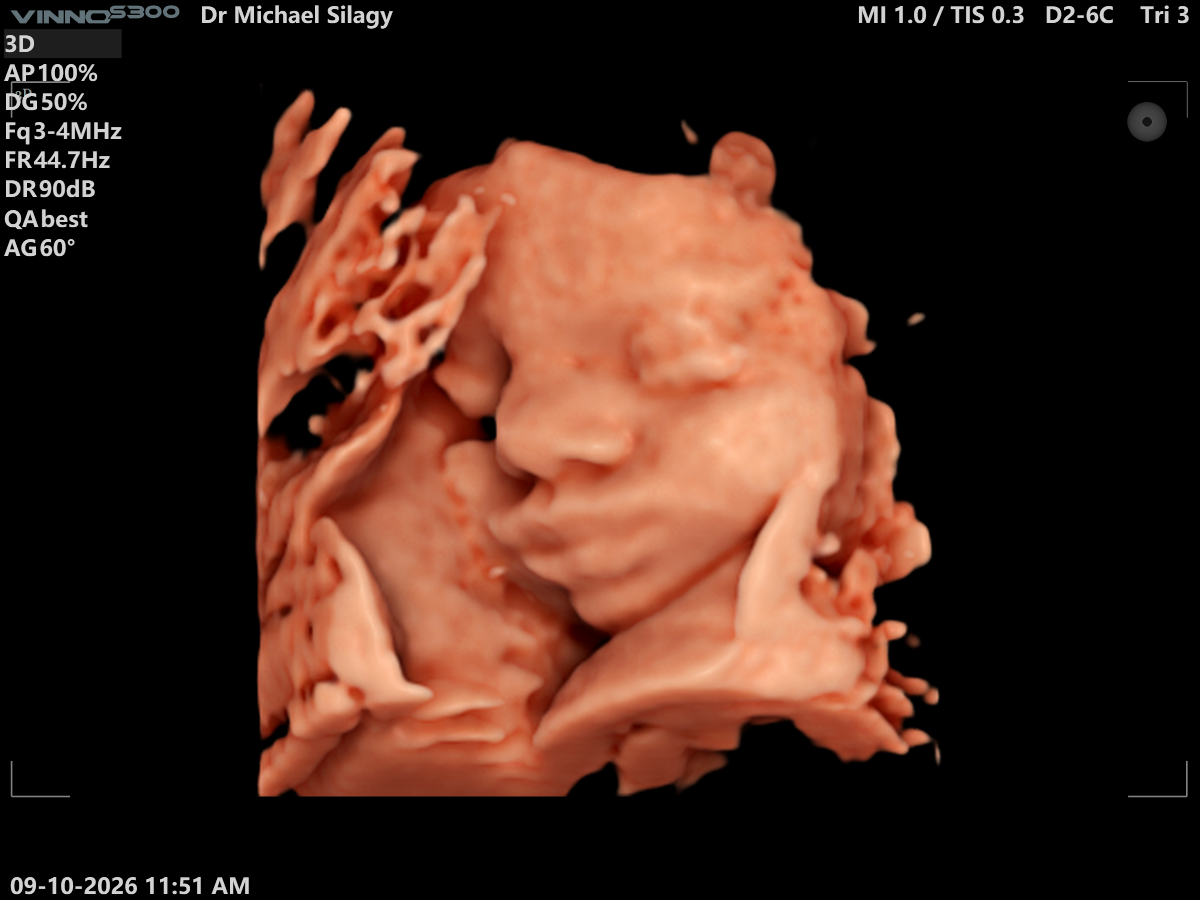
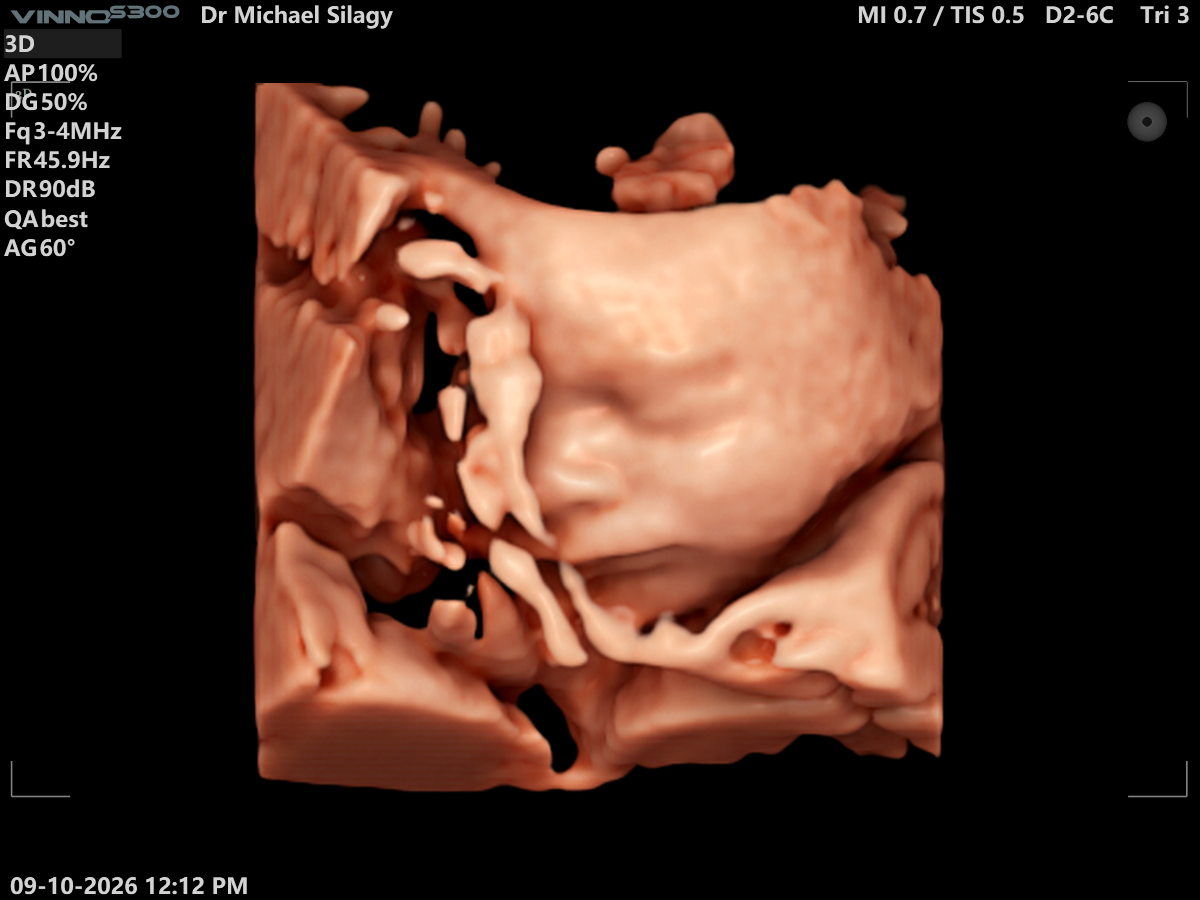
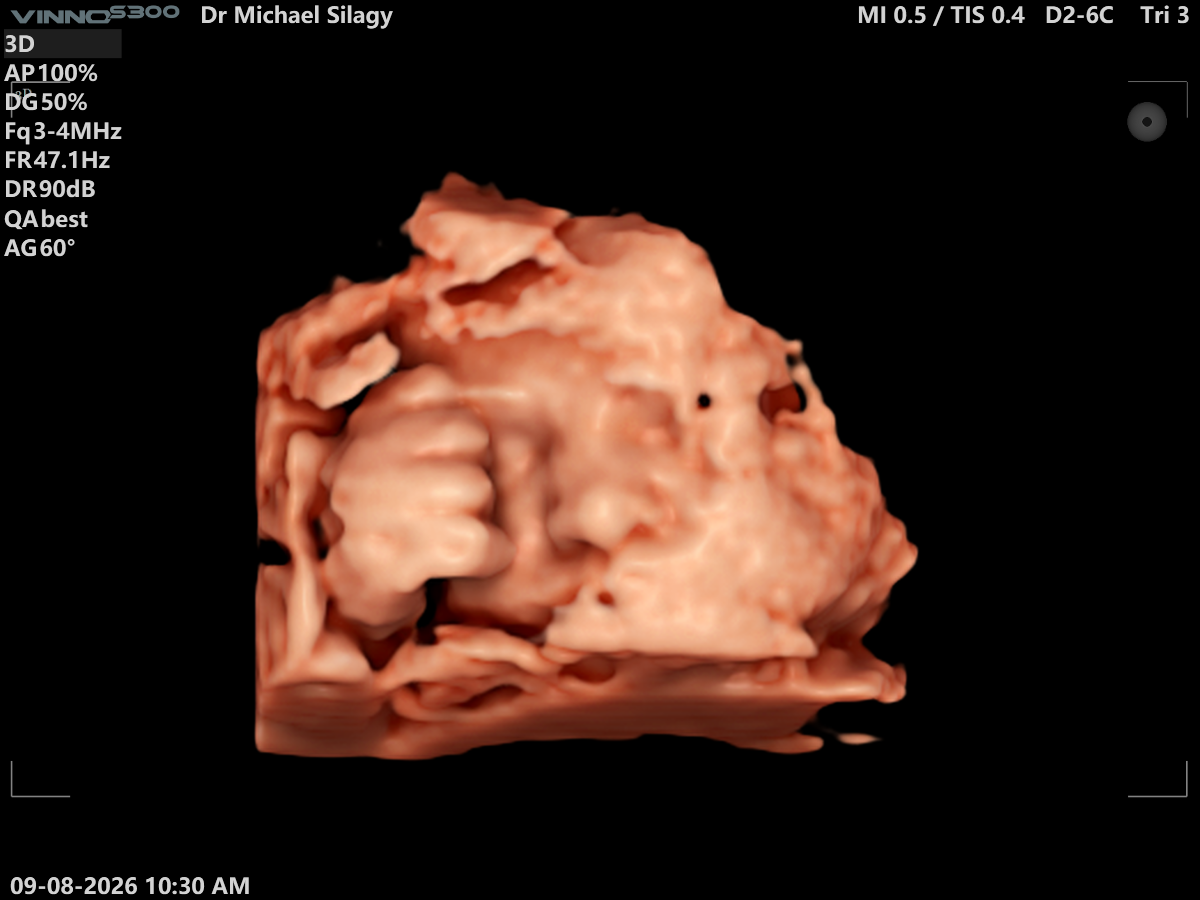
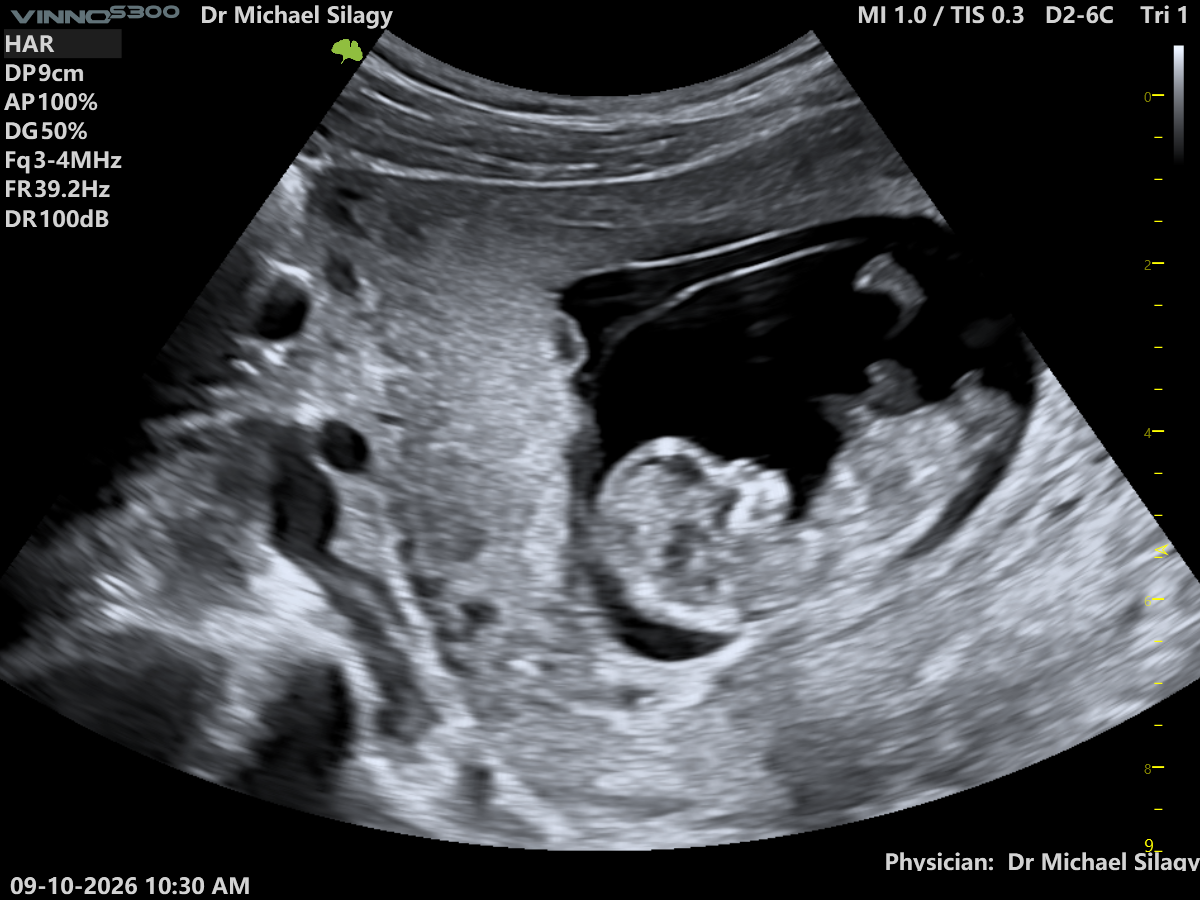
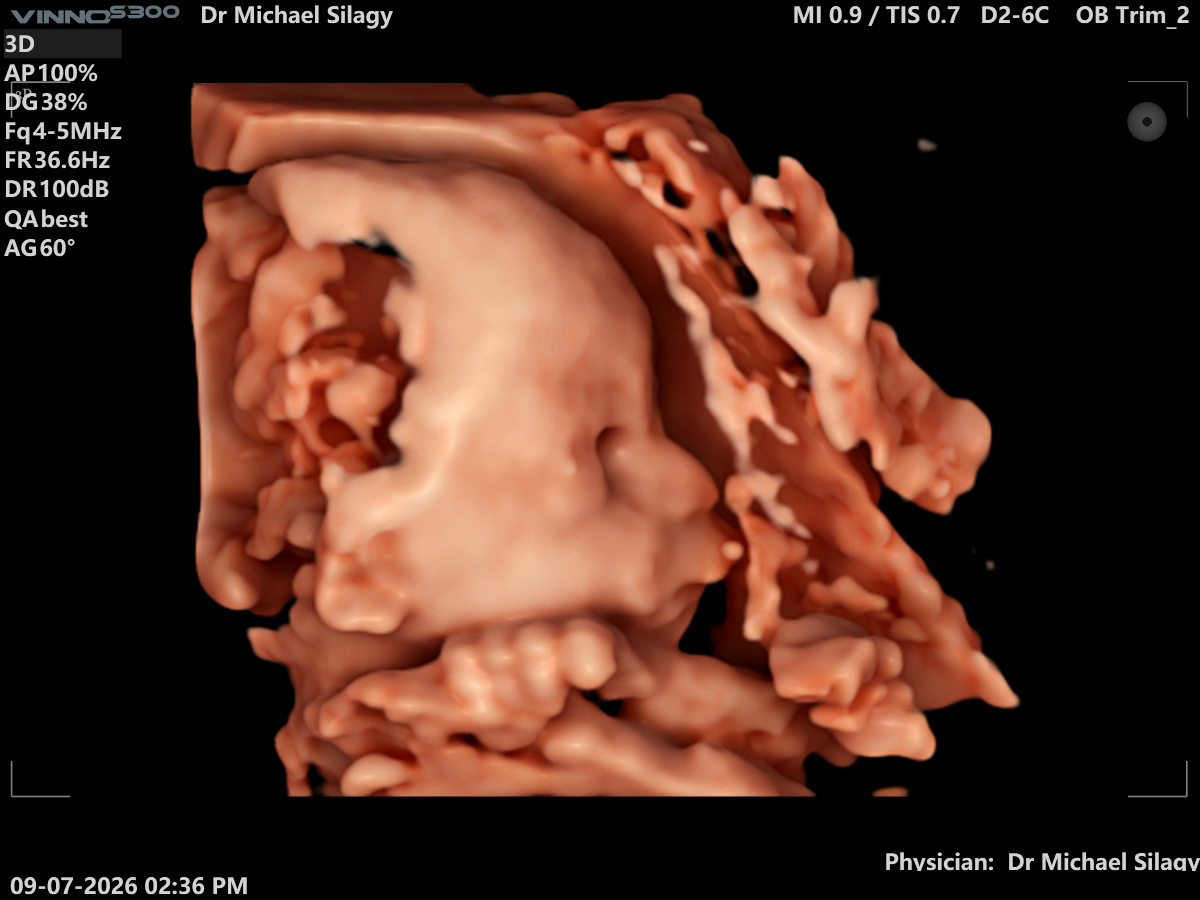
Yes! At every appointment, Michael will scan your baby using his 2D, 3D and 4D (real-time) scanning facilities. Michael will email your scan images to you, and will also print special keepsake photos for you to take home on the day.
Can you always get 3D pictures?
Not always. Babies can be shy, covering their face with their hands or snuggling up against the placenta! If the face is obscured, or your baby's head has moved low into the pelvis, it can sometimes be tricky to capture a clear 3D image. We'll always do our best to get you a beautiful picture.
When is the best time to get 3D pictures of my baby?
We find the sweet spot is from 28 weeks onwards. As you move into the third trimester, your baby starts to show it’s facial features in detail, which makes for some really lovely 3D images.
What's the difference between 2D, 3D and 4D ultrasound?
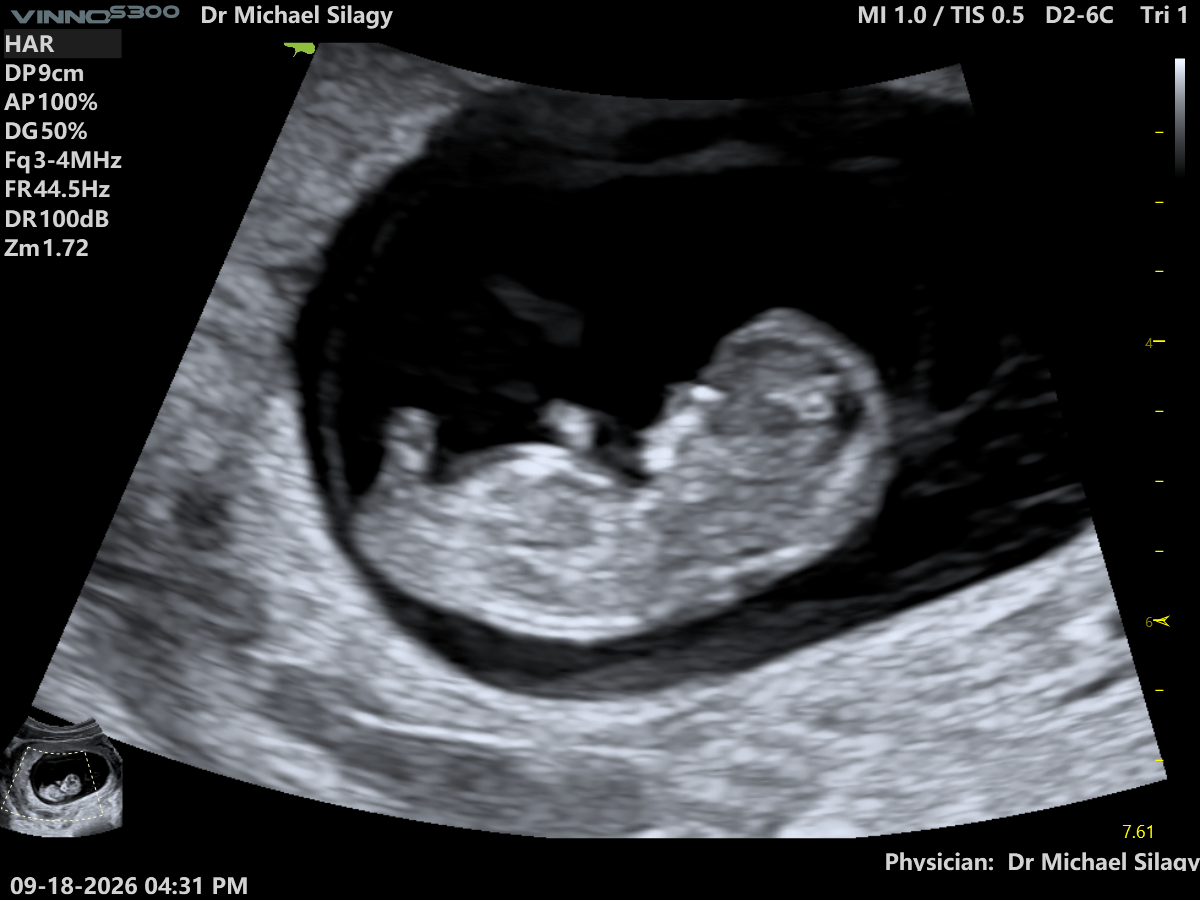
2D ultrasound is the classic black-and-white image, showing a single flat plane, this is the traditional "facial profile" picture.
3D ultrasound captures a still image of your baby's face and features in three dimensions.
4D ultrasound is like 3D, but moving in real time, so you might catch your baby yawning, sucking their thumb, or poking out their tongue!
Is there an extra charge for 3D ultrasound?
No! Michael will perform 3D and 4D scanning at every appointment where possible, along with all your pictures, at no extra cost.

Personalised Pregnancy Care & Birthing Toorak, Melbourne
Michael welcomes the opportunity to discuss your pregnancy care needs and help you plan for this special time in your life. Contact the practice to schedule your initial consultation and begin your personalised pregnancy care journey.